











November 17, 2026


When sales teams search for an AI sales proposal generator, they are usually trying to solve a painful bottleneck: getting accurate, persuasive quotes out the door before a prospect loses momentum. Unfortunately, the first wave of AI tools entering the sales and quoting space has largely stopped at the surface.
Most platforms claiming to offer AI proposal generation act as little more than chatbots or text wrappers. They can rewrite an executive summary, polish an email introduction, or pull boilerplate answers from an FAQ library. While faster copywriting saves a few minutes of typing, it does nothing to solve the hardest part of B2B quoting—translating complex customer requirements, technical blueprints, and sprawling product catalogs into an error-free, profitable quote.
To drive real sales velocity, an AI sales proposal generator cannot just write about your products; it has to understand how your products work, fit, and price together. By anchoring artificial intelligence directly inside Configure, Price, Quote (CPQ) architecture and catalog management, iQuoteXpress demonstrates what happens when AI moves past basic text generation and becomes an engine for operational sales intelligence.
Key takeaways
- Text generation is not quoting intelligence: Most AI proposal tools focus on copywriting and document formatting, leaving sales reps and estimators to manually calculate configurations, validate compatibility, and check margins.
- Catalog management is the true AI battleground: Purpose-built AI CPQ reads unstructured technical inputs—such as CAD files, blueprints, and RFPs—and automatically matches them against thousands of SKUs, dependencies, and pricing rules.
- AI readiness prevents garbage-in, garbage-out: An AI quoting engine is only as reliable as the underlying catalog data; structured, continuously validated product trees ensure accuracy and real-time margin protection.
- Enterprise guardrails eliminate hallucinations: Governed AI CPQ restricts recommendations strictly to validated catalog rules and approved discounting thresholds, creating an auditable trail from source file to final proposal.
The limitation of copywriting-first AI proposal tools
If your business sells a single flat-rate SaaS subscription or a standardized consulting package, a basic AI document writer might feel transformative. You feed it a discovery call transcript, and it drafts a clean pitch deck or cover letter.
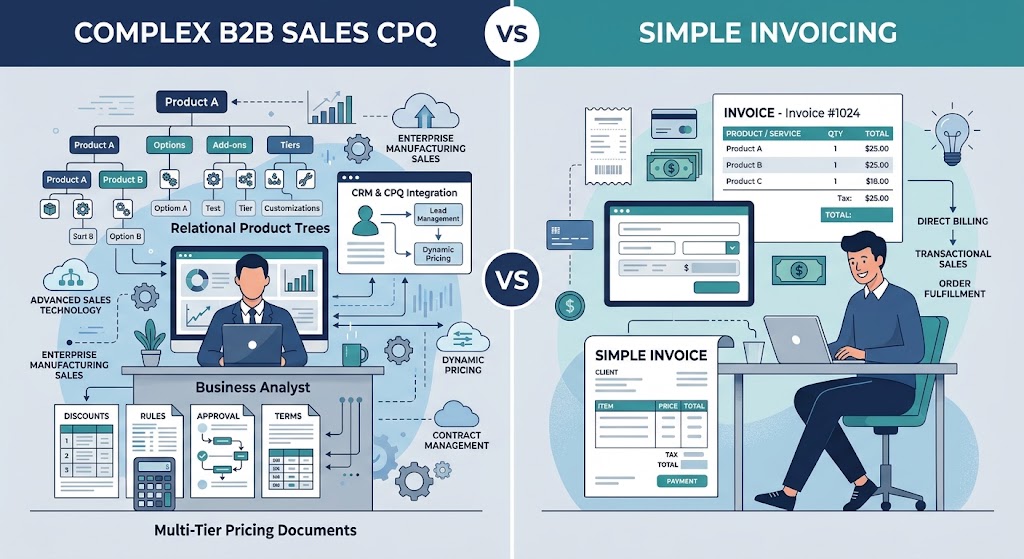
However, in industries with complex physical goods, custom assemblies, or multi-tiered service bundles—such as manufacturing, construction, high tech, and specialty distribution—writing the cover letter takes ten minutes, while building the actual quote takes ten days.
Copywriting-focused AI tools fail in complex sales environments for three reasons:
- They cannot interpret technical source files: A generative text model cannot read a multi-layered architectural drawing, count window openings, measure structural dimensions, and map those measurements to compatible hardware.
- They can hallucinate configurations: Without strict ties to relational product rules, a general-purpose AI will happily recommend parts that do not fit together, omit required sub-assemblies, or quote discontinued SKUs.
- They ignore margin and pricing logic: Formatting a nice-looking PDF does not protect profitability if the underlying line items rely on outdated supplier costs or unapproved volume discounts.
When an AI-enabled sales proposal generator stops at surface prose, the human sales rep still has to do all the heavy lifting in spreadsheets before the AI ever touches the document. True automation flips that workflow: the AI handles the technical ingestion, catalog matching, and pricing math first, then populates polished proposal templates automatically.
How iQuoteXpress brings AI into the core of CPQ and catalog management
Rather than bolting a chat window onto the side of a quoting tool, iQuoteXpress embeds purpose-built AI directly into the CPQ workflow. Instead of forcing estimators and reps to manually translate dense technical files into line items, IQX bridges the gap between raw, unstructured project inputs and your proprietary product catalog.
Reading between the lines of complex files
Modern B2B buyers rarely hand over a neatly formatted order form. Instead, they send over heavy engineering schematics, equipment RFPs, or multi-page architectural plans. IQX’s AI engine ingests, interprets, and cross-references multiple technical file formats—including CAD, PDF, DXF, and DWG—in seconds.
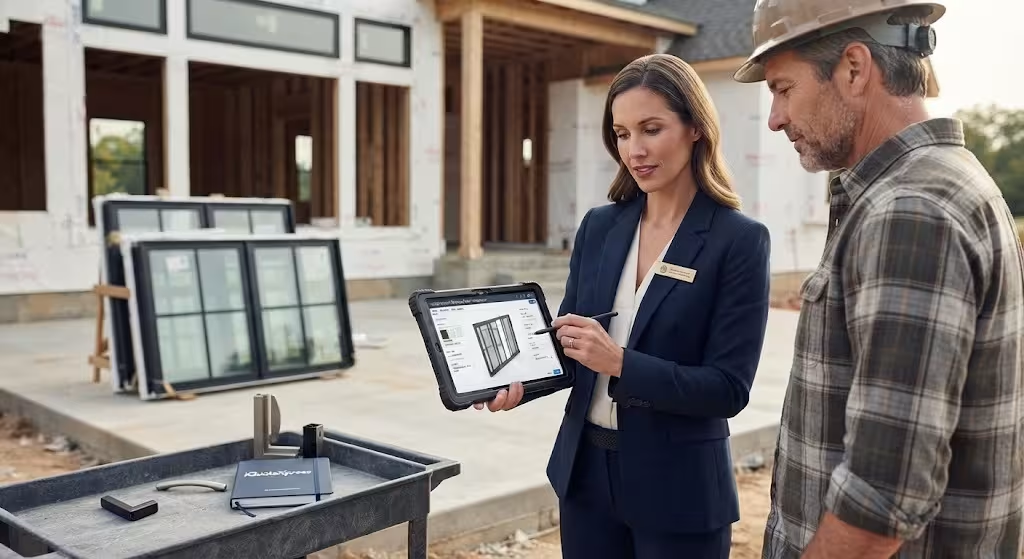
Consider a commercial window and door manufacturer bidding on a new building project. Traditionally, an estimator had to review every page of the architectural drawings by hand, tally openings, record custom dimensions, check material waste, and cross-reference those specs against a massive catalog. With iQuoteXpress, that process becomes a four-step automated workflow:
- Blueprint ingestion: The user uploads the architectural file (PDF, CAD, DXF, or DWG) directly into the platform.
- Contextual analysis: The AI scans the structural layout and extracts granular data points—identifying specific door types, custom window sizes, quantities, unit measurements, and waste factors—while assigning a confidence score to each extraction.
- Automatic catalog matching: The engine immediately cross-references those extracted specs against the company's proprietary catalog, selecting the exact fits, compatible hardware, and required accessories.
- Instant quote generation: All validated line items flow directly into a customer-ready proposal, eliminating manual counting errors and shrinking turnaround times from days to minutes.
Scaling intelligence across intricate product catalogs
That same catalog-first intelligence applies wherever SKU complexity creates a quoting bottleneck:
- Manufacturing: Engineered drawings and schematics are parsed automatically to map out multi-component assembly quotes, pulling matching sub-assemblies and labor costs based on custom dimensions.
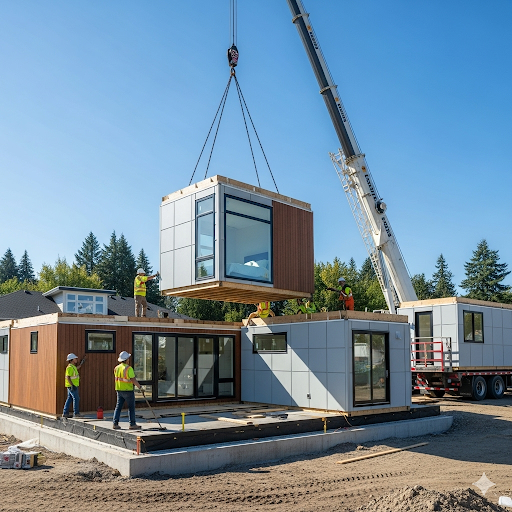
- Home building and construction: Architectural layouts and material lists are analyzed to bundle thousands of SKU variations—from framing lumber to finish fixtures—without missed dependencies.
- Specialty distribution and commercial equipment: Dense technical spec sheets and equipment RFPs are cross-referenced against sprawling supplier catalogs to capture compatible parts, options, and aftermarket add-ons.
By pairing AI ingestion with automated product and pricing configuration, sales teams ensure every quote reflects accurate rules, volume tiers, and bundle dependencies.
AI readiness: Why clean catalog data makes or breaks automation
Any enterprise software leader knows that applying AI to messy, disorganized data only produces bad answers faster. In the quoting world, an unmaintained spreadsheet full of duplicate part numbers, outdated pricing, and undocumented compatibility rules will derail even the smartest algorithm.
That is why iQuoteXpress treats AI readiness as a foundational requirement rather than an afterthought. Before activating AI-assisted quoting, product and pricing data must be structured, normalized, and organized into clear relational hierarchies optimized for machine consumption.
iQuoteXpress partners directly with organizations to prepare and structure their catalog data so it is genuinely AI-ready. Once live, the platform runs continuous, automated checks against primary source data. This ensures real-time margin protection and up-to-the-minute cost accuracy—meaning reps never accidentally quote expired supplier pricing or unprofitable configurations.
Furthermore, connecting this structured catalog activity to sales analytics gives revenue leaders clear visibility into quote turnaround times, win rates by product line, discount trends, and rep productivity.
Enterprise guardrails: Governance that prevents AI hallucinations
Speed means nothing in B2B sales if a quote exposes your company to financial loss or engineering rework. Many organizations hesitate to adopt an AI sales proposal generator because they worry a generative model might invent product specifications, promise unsupported customizations, or apply unauthorized discounts.
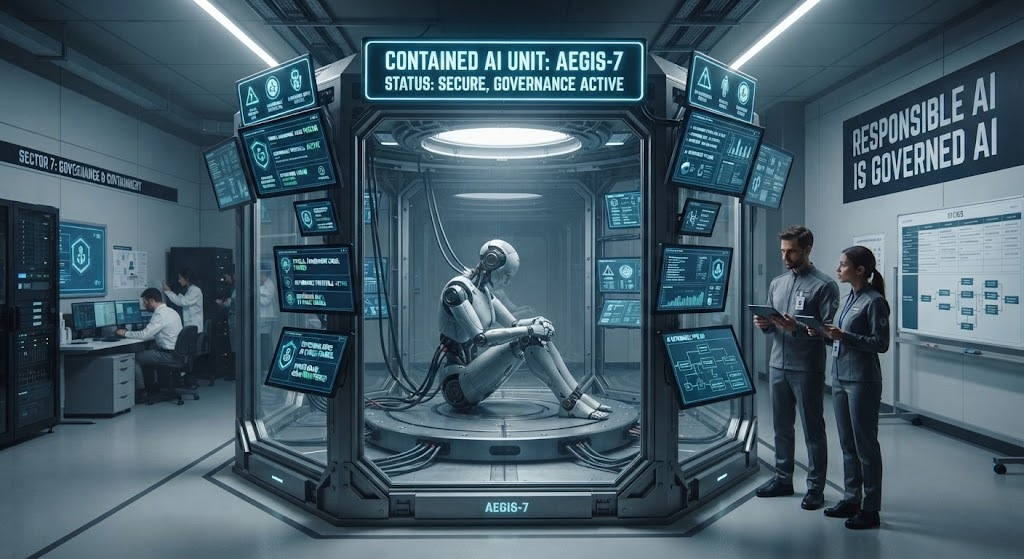
iQuoteXpress addresses this risk by embedding strict AI governance and operational guardrails at every layer of the quoting engine:
- Strict catalog constraints: The AI cannot invent SKUs, hallucinate technical specs, or pair incompatible components. Every recommendation is anchored strictly to validated relational product trees and defined business rules.
- Margin and pricing controls: Automated pricing guardrails enforce corporate floor margins and approval workflows, preventing unauthorized discounting or pricing anomalies.
- Full auditability and source traceability: Transparent logging allows sales managers and engineers to trace every automated line item directly back to the exact blueprint page, CAD layer, or RFP requirement that triggered it.
Because these governed outputs connect seamlessly via CPQ CRM integration to platforms like Microsoft Dynamics 365, Salesforce, Zoho, and leading ERP systems, opportunities, accounts, and approved line items stay synchronized across the entire revenue stack without manual re-keying.
Choosing the right AI approach for your sales workflow
Evaluating an AI sales proposal generator comes down to identifying where your sales team actually loses time. If your biggest hurdle is drafting introductory prose for simple service agreements, a basic AI writing assistant may suffice.
However, if your deals stall because estimators and reps spend hours deciphering technical drawings, cross-checking thousands of SKUs, and double-checking configuration rules, copywriting AI only polishes the surface of a much deeper problem. By putting AI to work inside catalog management, file ingestion, and rules-based configuration, iQuoteXpress turns complex technical inputs into accurate, margin-protected proposals in minutes—giving your team the speed of automation without sacrificing the precision your business depends on.
FAQs on AI and CPQ
1. How is an AI-fueled CPQ platform different from a standard AI sales proposal generator?
Standard AI proposal generators focus primarily on copywriting—drafting executive summaries, formatting text, or pulling answers from static content libraries. An AI-fueled CPQ platform like iQuoteXpress goes deeper into the operational workflow by reading technical files (such as CAD, DWG, DXF, and PDF blueprints), matching extracted requirements against complex product catalogs, enforcing pricing and compatibility rules, and automatically generating a fully configured, accurate quote.
2. Can AI CPQ prevent hallucinations and inaccurate product configurations?
Yes, when built with enterprise guardrails. Unlike open-ended generative chatbots that can invent details, iQuoteXpress anchors its AI strictly to your validated relational product catalog and business rules. The system cannot fabricate SKUs, suggest incompatible parts, or bypass margin thresholds, and every automated line item includes transparent audit logs tracing back to the source document.
3. What types of files can iQuoteXpress AI analyze to build a quote?
IQX’s AI engine can ingest and interpret a wide variety of unstructured technical and project files, including architectural blueprints, engineering schematics, equipment specification sheets, and RFPs in formats such as PDF, CAD, DXF, and DWG. It extracts item types, dimensions, quantities, and unit requirements to match them automatically against your catalog.
4. What does "AI readiness" mean for product catalog management?
AI readiness means structuring, cleaning, and organizing your product and pricing data into clear relational hierarchies before applying automation. Because AI relies on accurate underlying data to make valid recommendations, iQuoteXpress helps businesses prepare their catalogs and runs continuous automated checks against primary source data to protect profit margins and ensure up-to-date pricing.
5. Which industries benefit most from AI-driven catalog management and quoting?
Any B2B organization managing large, intricate catalogs with complex dependencies benefits significantly from AI CPQ. Key industries include window and door manufacturing, commercial and residential construction, custom manufacturing, high tech, specialty distribution, and commercial equipment—sectors where reps otherwise spend hours manually translating blueprints and spec sheets into line-item quotes.

+38 trusted us
Contact us today for a free demo and see how our solution can help your business
The best way to learn about us is to see for yourself. We respect your privacy. No nonsense.

If you prefer, contact us by email!
sales@iquotexpress.com
