









December 15, 2025


Manufacturing 5.0 is upon us! And as customer demands for highly personalized products are soaring, and market competition is fierce, the traditional, manual process of configuring, pricing, and quoting products has become a significant liability. Complex product portfolios, fluctuating material costs, and intricate pricing matrices often lead to slow quote turnaround times, costly errors, and friction between sales and engineering teams.
Enter Configure, Price, Quote (CPQ) solutions. Far from being a mere sales tool, CPQ has emerged as a critical, strategic platform that acts as the digital backbone connecting the commercial front-end with the operational back-end of a manufacturing business. A CPQ solution offers unique, transformative benefits that address the industry's most pressing challenges, from the complexity of product configuration to the imperative of maintaining profit margins.
The Unique Benefits of CPQ in Manufacturing
The manufacturing sector deals with a level of product complexity few other industries can match. Products often have thousands of potential configurations, each affecting everything from the Bill of Materials (BOM) to the final price and delivery schedule. CPQ is purpose-built to handle this complexity, delivering a competitive advantage across several core areas.
1. Eliminating Errors in Complex Product Configuration
The single most significant advantage CPQ offers to manufacturers is its ability to enforce configurability rules instantly. When a sales representative or customer is configuring a complex piece of machinery, an industrial pump, or a custom-spec component, the CPQ system uses built-in logic to ensure that every selection is technically valid and manufacturable.
Real-time Validation: As options are selected, the system immediately alerts the user to incompatible choices (e.g., a motor that cannot be paired with a specific frame) or automatically includes necessary components (e.g., adding a specific cabling harness when a certain control panel is chosen).
Preventing Costly Rework: By eliminating the possibility of quoting an "unbuildable" product, CPQ prevents orders that would require extensive, costly redesign and rework by the engineering team post-sale. This saves significant time and money and avoids disappointing the customer.
Streamlined Handoff to Production: Once a quote is accepted, the CPQ system automatically generates accurate, production-ready documentation, including a precise Bill of Materials (BOM), routing information, and even preliminary CAD drawings. This drastically speeds up the transition from a sales opportunity to a work order.
2. Accelerating the Quote-to-Cash Cycle
In manufacturing, speed can be the deciding factor in winning a bid. Manually calculating a quote for a custom product often requires multiple internal reviews—sales, finance, and engineering—taking days or even weeks. CPQ drastically compresses this timeline.
Instant Quote Generation: With all product, pricing, and discounting rules centralized, a sales rep can configure, price, and generate a professional, polished quote document in minutes, not days. This enables faster responses to RFPs and allows sales teams to quote up to 50% more volume.
Guided Selling for New Reps: CPQ's guided selling feature acts as an embedded expert, leading even new or junior sales representatives through the complex product catalog and configuration process with targeted questions. This significantly reduces the training time for new hires, allowing them to become productive much faster.
Self-Service Capabilities: For B2B companies embracing eCommerce, CPQ can power a customer-facing portal, allowing buyers to configure, visualize (often with 3D models), and get instant pricing for their custom products themselves, anytime, anywhere.
3. Protecting and Maximizing Profit Margins
In a high-cost environment like manufacturing, accurate pricing is crucial for profitability. A single manual error in a spreadsheet can lead to underpricing a multi-million-dollar deal. CPQ provides an unprecedented level of pricing control and dynamic accuracy.
Real-Time Pricing Engine: CPQ integrates with Enterprise Resource Planning (ERP) systems to pull real-time data on material costs, labor rates, and inventory. The pricing engine automatically accounts for all variables, including volume discounts, regional pricing, specific customer contracts, and even currency conversions.
Discount and Margin Control: It establishes a clear framework for discounting, ensuring that sales reps can offer competitive pricing without accidentally eroding profit margins. Approval workflows are automated to escalate deals that breach predefined margin thresholds, maintaining financial oversight.
Identifying Upsell/Cross-Sell Opportunities: The system's intelligence can proactively recommend complementary products, accessories, or services (cross-sell) or suggest a higher-value configuration (upsell) to maximize the deal size while meeting the customer's needs.
4. Bridging the Gap Between Sales, Engineering, and Production
CPQ serves as a single source of truth for product information, eliminating organizational silos and fostering cross-functional alignment.
Unified Data: All teams—sales, engineering, and manufacturing—work from the same, validated product data, configuration rules, and BOMs. This eliminates miscommunication and the "us vs. them" mentality often caused by outdated or inconsistent spreadsheets and documents.
Faster Product Introduction: New products, options, and pricing updates can be instantly distributed across the entire sales network. This accelerates the go-to-market timeline, ensuring sales teams are always selling the latest, approved offerings.
Accurate Forecasting: By capturing detailed configuration data at the quote stage, CPQ provides vastly improved visibility into future demand, allowing production and supply chain managers to create more accurate forecasts and optimize inventory levels.
The Critical Role of the CPQ Provider
While the software itself is powerful, the successful realization of these benefits hinges on the expertise of the CPQ provider. For manufacturers, a CPQ implementation is not an out-of-the-box software install; it is a complex, strategic business transformation project.
Phase 1: Custom Implementation and Configuration
The CPQ provider's initial role is to act as a partner, translating the manufacturer's deep, often esoteric, product knowledge and business logic into the system's digital rules engine.
- Business Process Mapping and Discovery: The provider conducts in-depth workshops to understand the manufacturer's unique sales process, product complexity, pricing models, and regulatory constraints. They map out the customer journey from initial inquiry to production handoff.
- Configuration Logic Development: This is the most critical step. The provider's technical consultants must possess the specialized expertise to translate thousands of pages of engineering specifications, dependency rules, and option constraints into the CPQ engine's code and logic. They are responsible for building the digital twin of the product catalog.
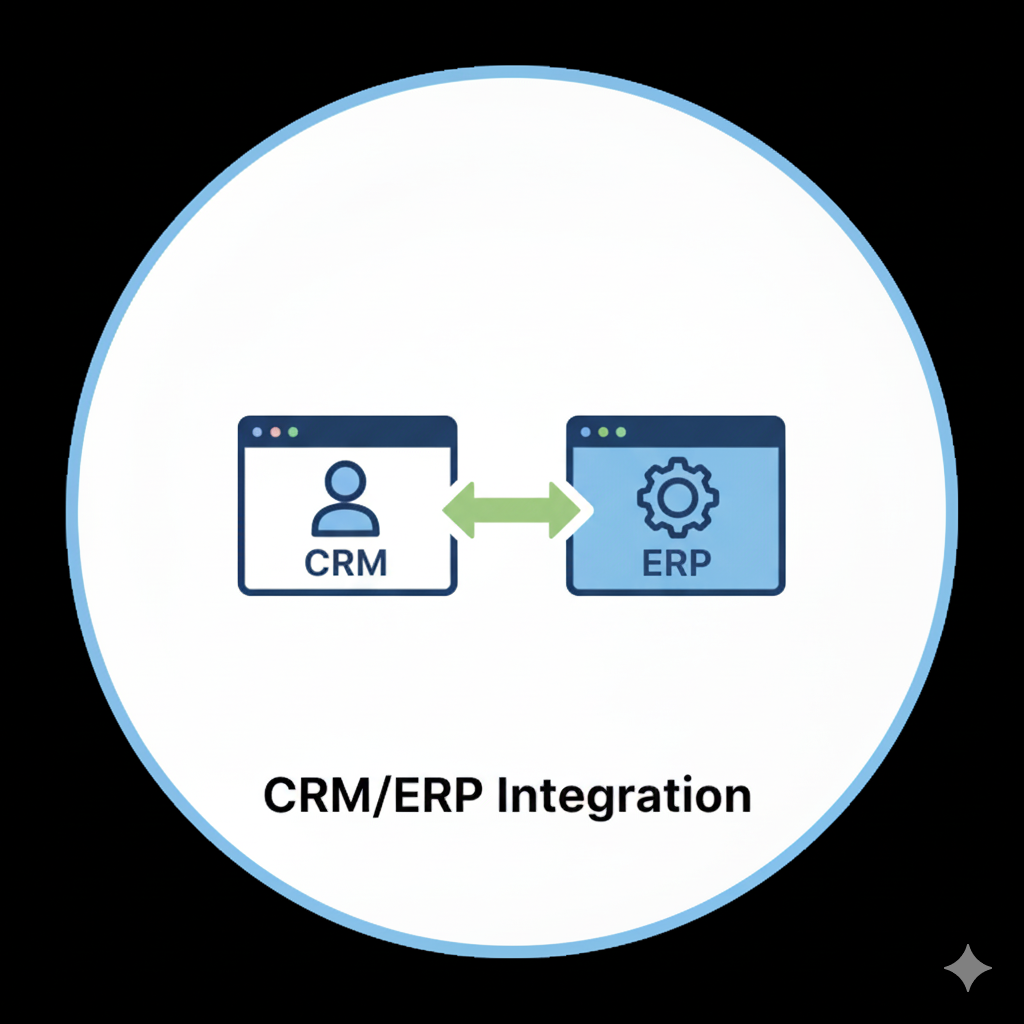
- System Integration: A CPQ solution only works effectively when it is seamlessly integrated with the manufacturer's existing enterprise systems. The provider is crucial in establishing stable, bi-directional connections with:
- CRM (Customer Relationship Management): To pull customer data and push quote status.
- ERP (Enterprise Resource Planning): To access real-time inventory, material costs, and manufacturing capacity.
- User Training and Change Management: The provider is responsible for comprehensive training programs tailored to different user groups (sales, engineering, finance). They also assist with change management strategies to ensure high user adoption, which is vital for maximizing the return on investment (ROI).
Phase 2: Ongoing Support and Strategic Optimization
A CPQ system must evolve as the manufacturer's product line, market strategies, and costs change. The CPQ provider’s role extends far beyond the go-live date.
- Maintenance and Rule Updates: As products are retired, new options are introduced, and pricing models shift (e.g., due to annual cost-of-goods-sold changes), the provider is often tasked with updating the configuration and pricing rules within the system. This requires constant collaboration to keep the digital product catalog aligned with the physical one.
- Performance Monitoring and Scaling: The provider monitors system performance, ensuring the configuration and quoting engine remains fast and reliable, even as the product complexity or user volume increases. They ensure the solution is scalable to handle new markets, subsidiaries, or distribution channels.
- Strategic Optimization: The best CPQ providers act as long-term strategic partners. They leverage the data and analytics generated by the system—such as which configurations are most popular, which discounts are most effective, and where the sales process is bottlenecking—to recommend improvements. This might involve optimizing the guided selling workflow, refining discount rules to protect margins, or suggesting new product bundles based on customer buying patterns.
CPQ is not a temporary fix but a permanent, strategic platform essential for the future of manufacturing sales. It is the engine that transforms the complexity of highly configurable products into a simple, rapid, and error-free commercial process. By standardizing configuration logic, automating complex pricing, and aligning the sales and production workflows, CPQ drives significant increases in sales efficiency, improves order accuracy, and protects the manufacturer's critical profit margins.
The success of this transformation rests heavily on the expertise of the CPQ provider, whose custom implementation and ongoing support ensure that the solution remains an accurate, efficient, and scalable tool. For any modern manufacturer striving to meet the demand for mass customization without sacrificing speed or profitability, a robust CPQ solution, backed by a knowledgeable partner, is the competitive imperative.




+38 trusted us
Contact us today for a free demo and see how our solution can help your business
The best way to learn about us is to see for yourself. We respect your privacy. No nonsense.

If you prefer, contact us by email!
sales@iquotexpress.com
